
Chris Lael Larson
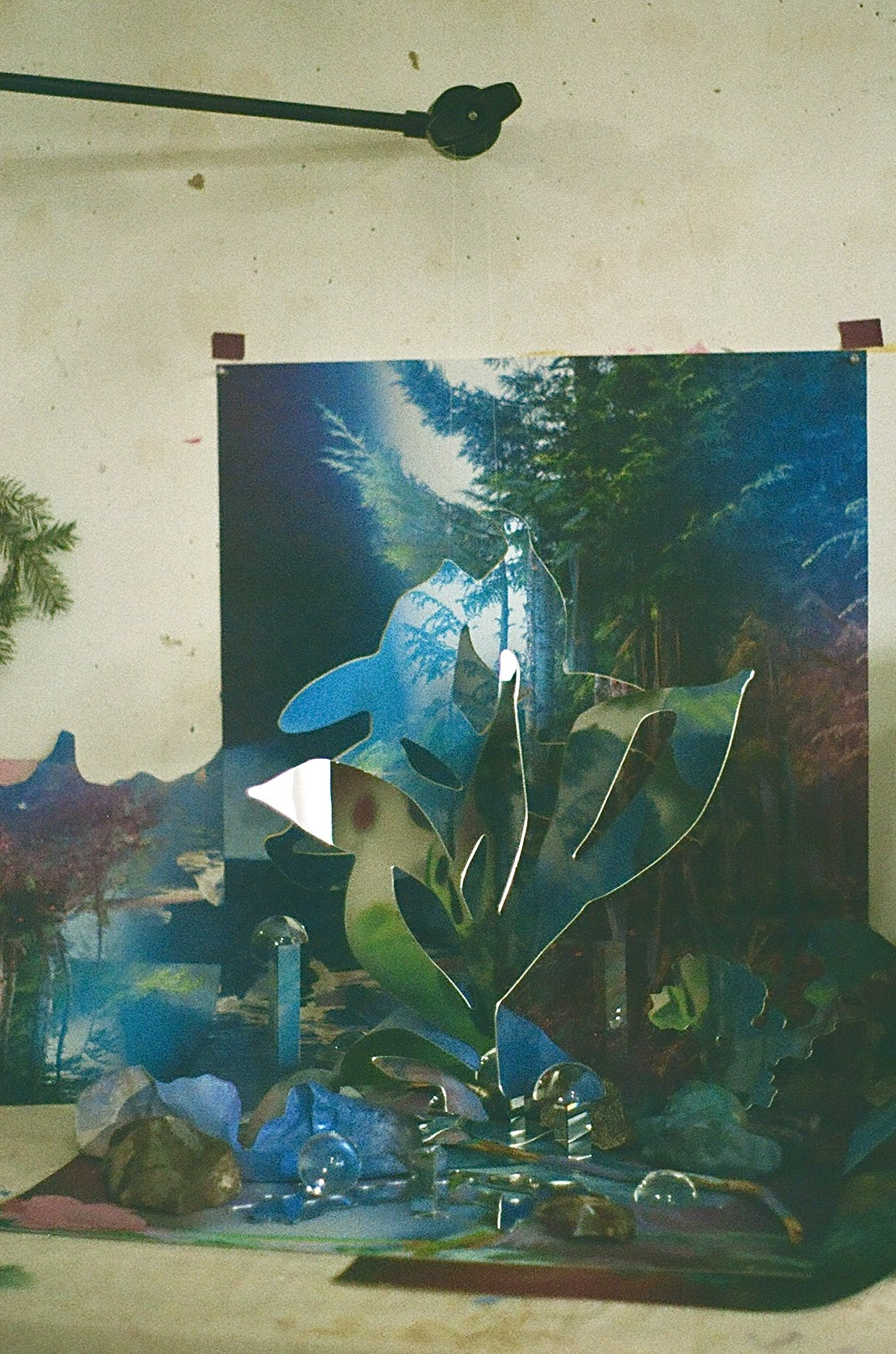
Getting into the layers, layers, layers, and being a sucker for crystals.
In Chris Lael Larson’s studio, we talked about all the layers in his work, materially and in process. There is a dimensionality and richness in his installations he creates in his studio, that he then photographs, and then prints. Seeing the three-dimensional installations in person, noticing firsthand how precarious their elements are: a fishing line tethered to a piece of paper, cardboard propping up a cutover from an old painting, a scrap of cellophane or piece of lichen delicately balancing on the edge of a crystal. These sculptural manipulations of material to create an image are impermanent, and one of the reasons Larson hasn’t tried to create the installations for an exhibition, even though it's one of the top questions he gets from people. The reflectiveness - crystals, prisms, mirrors – which both of us share we are suckers for, pull you in. Their illumination is captivating and a welcomed entry point to his graphics, paintings, and staged imagery he uses that is opaque, color forward. He alluded that some of these elements that bring his photographed installation to life will be in his upcoming show, Lost Lake, at Carnation Contemporary (February 7 - March 1, 2026).
For the past two years, Larson’s ethos has been to “say yes to everything,” even when he knew there were probably a lot of things he didn’t know. When his practice was in the nascent stage, he knew he had to keep working on it to push it forward. He likens making artwork in his studio to doing “artistic reps.” The more you make work, the better you get at it.
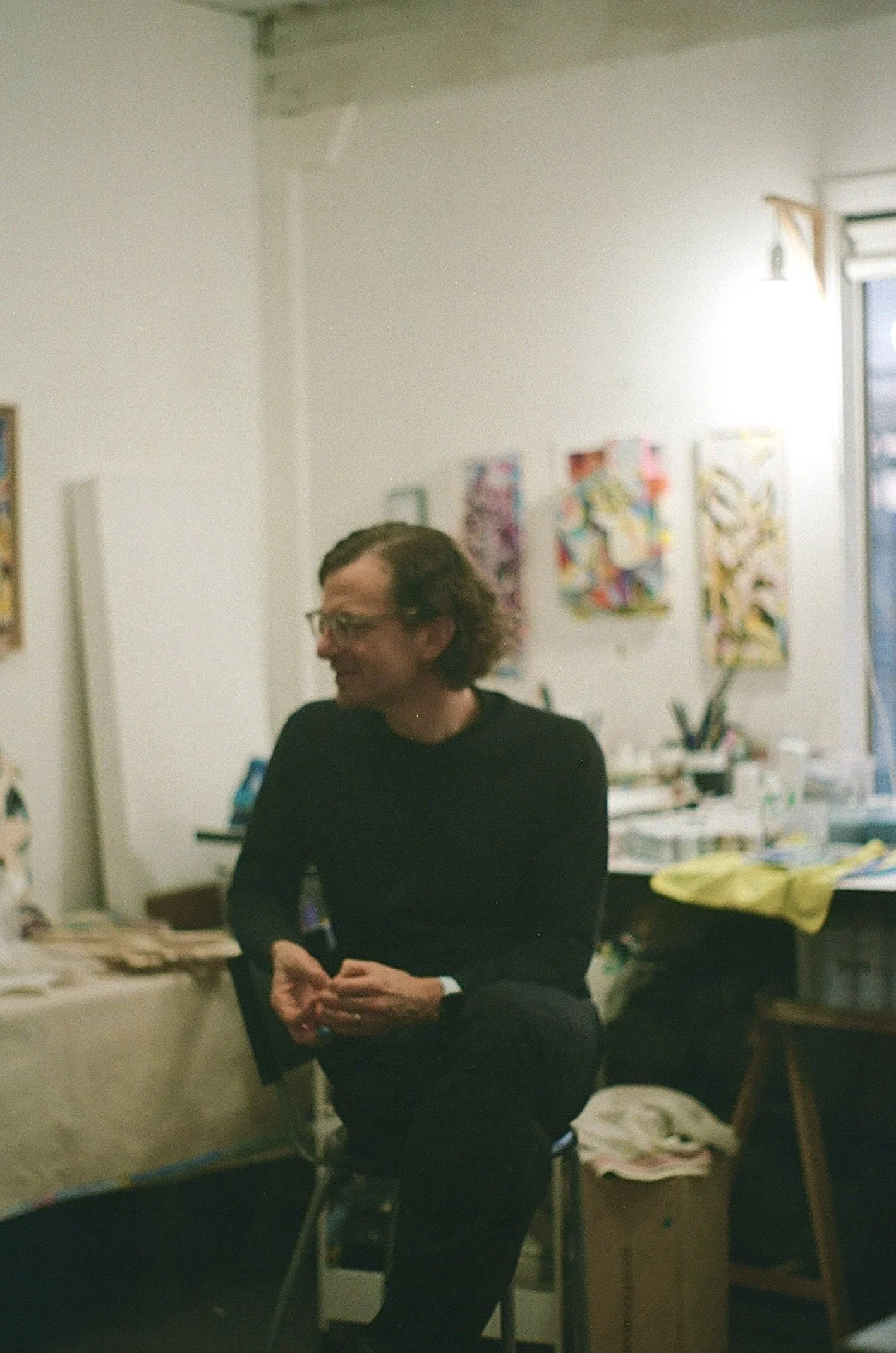
During the day, Larson works as a graphic designer at an agency, which is clearly separate from his creative artistic practice. He makes it into the studio on weekends and a couple of other days during the week. He has a clear delineation between his time in the studio creating and his admin day, when he is answering emails, applying to shows, or seeking other artistic opportunities. This is intentional, so his creative practice doesn’t get gobbled up by the necessary but less creative aspects of being an artist. The “work is the engine” that moves everything forward. His cultivation of atmosphere involves creating a different playlist for each new series. It’s more for him to create the mental space for his practice, with a deep intention, a world around his work, or an ”audio mood board,” if you will. This helps him shift his headspace from his 9-5. Our conversation centered on Larson’s prioritization of atmosphere, flow, and process.
Ashley Gifford: Could you share an artist or artists who inspire you, and why they are influential to you?
Chris Lael Larson: I keep coming back to Sarah Sze and Jessica Stockholder. I’ve followed both of their work for years, and I’m always struck by how they blend so many different materials and approaches into these immersive, layered environments. There’s an incredibly thoughtful. I’m drawn to their use of color and the way they combine unexpected materials in ways that feel both surprising and totally intentional. Their work really expands the idea of what a piece can be.
AG: What’s your favorite gallery in Portland right now?
CLL: It’s hard to pick just one; I really love what May has created at Nationale. She’s built something that feels specific and intentional. There’s a clear curatorial point of view, but it’s also deeply supportive of the artists and rooted in community. The space itself feels open and welcoming, and I always appreciate seeing work in natural light. I love books and publications; that mix of exhibitions and printed matter just feels perfect to me.
AG: Could you share a little about your studio practice, how often you go in and what that looks like, and how it aligns with your day-to-day life?
CLL: I’m usually in the studio about four days a week — a couple of weekday evenings and then on the weekends, since I work a day job during the week. I’m lucky that my studio isn’t too far from home, so it’s pretty easy to get there and stay consistent. It’s about 500 square feet, which gives me enough room to move between the different parts of my practice — photography, painting, sculpture — along with exhibition prep, printing, mounting, framing, finishing, and some storage. It’s not huge, but it works well for the way I like to move between processes.
AG: What are you listening to when you’re in the studio?
CLL: When I’m doing more creative work, I usually listen to instrumental music — a mix of experimental jazz, ambient, psychedelic, and electronic stuff. I’ll sometimes build these super long playlists — like 20 hours — and just put them on shuffle so they take on a kind of presence of their own. That way, I’m not distracted by choosing songs or albums. I’ll even make specific playlists for different bodies of work, curating the music to match the concept or mood. If I’m doing more mechanical tasks — mounting, prepping, cleaning, that kind of thing — I’ll switch to podcasts or audiobooks. Occasionally, I’ll even put on a TV show that I can mostly listen to without having to watch it.
AG: What do you like most when you learn about other artists or do a studio visit with them?
CLL: I’m always curious about what drives someone to create in the first place, and how their practice actually fits into the rest of their life. I like hearing how they approach exhibiting their work, how they think about selling it, and what they consider a successful show. I’m also interested in whether they feel like they’re building toward something specific, or if the work unfolds more organically over time.
AG: Top 3 colors!?
Lately, I’ve been really drawn to violet, light teal, and light pink. I’ve also been using a lot of metallic silver paint, though I’m not sure it really counts as a color—it just reflects whatever’s around it. I like that it shifts depending on what it’s next to.
AG: Could you share 3 to 5 words that describe your art?
CLL: Immersive, confounding, recursive, hybrid, dimensional.
AG: How do you know when a piece is finished?
CLL: That’s always a tricky one for me, especially because my process is so cyclical. Since I’m constantly layering, photographing, painting back into pieces, and sometimes reassembling elements, the work can technically keep going. There isn’t a clean, linear stopping point. Usually, I know a piece is done when my eye can move through it without getting snagged on anything that feels unresolved or underdeveloped. That doesn’t necessarily mean it’s harmonious or perfectly balanced. I’m not trying to smooth everything out. It’s more about the energy of the piece — whether it keeps you moving through it. I want the viewer’s eye to circulate, to discover different layers and perspectives, without hitting a dead end or getting stuck on something that feels unintentionally incomplete.
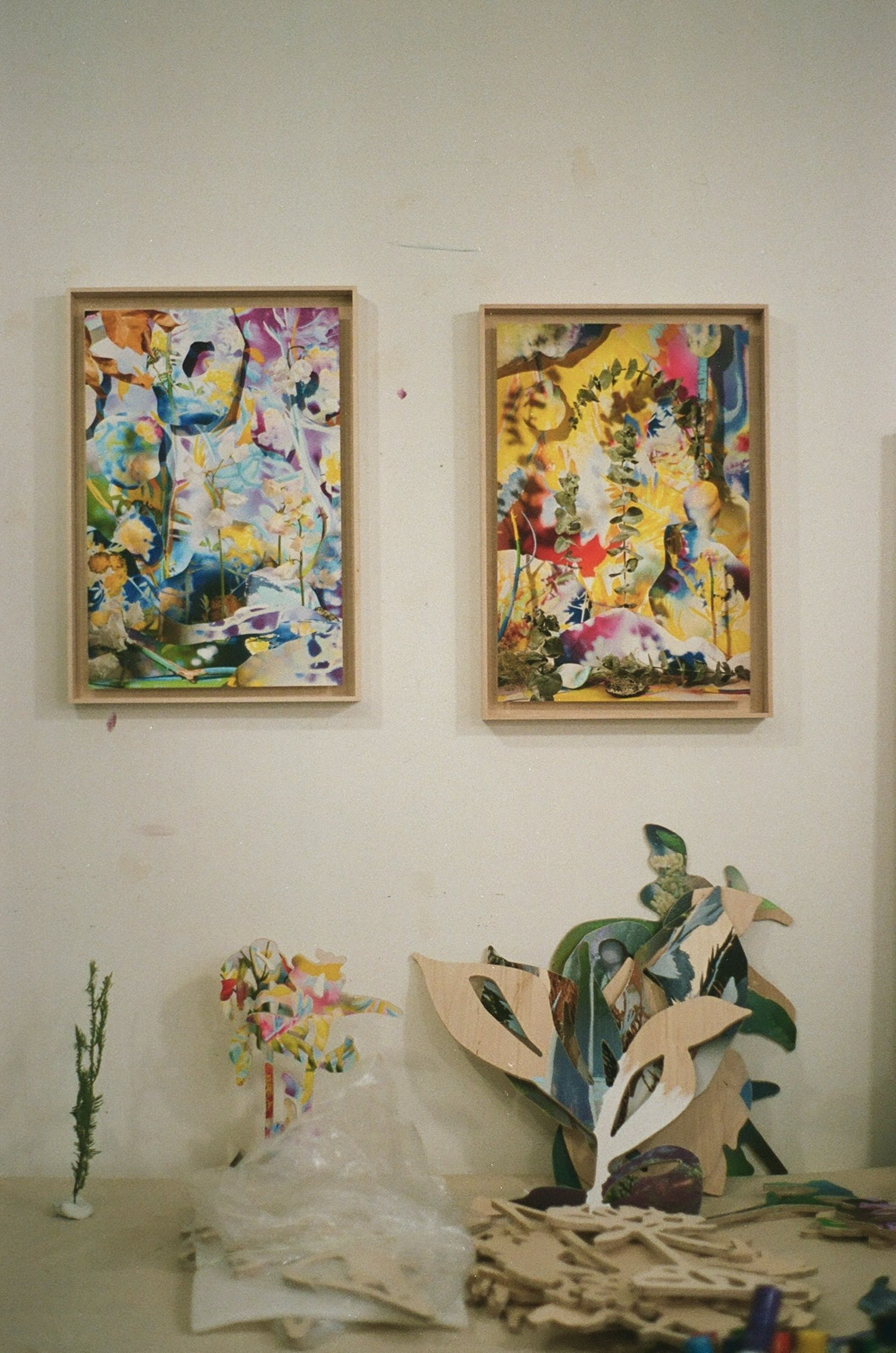
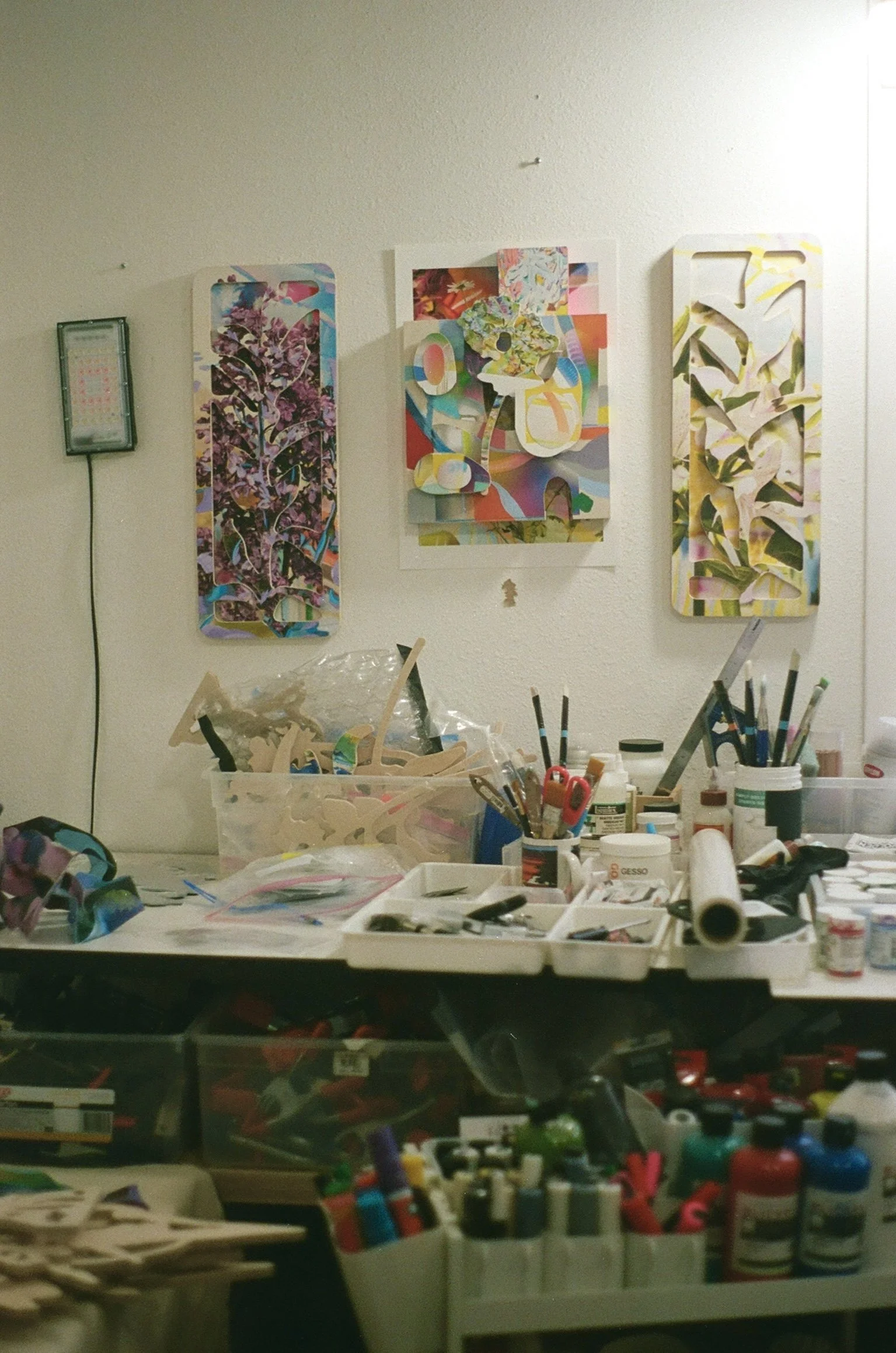
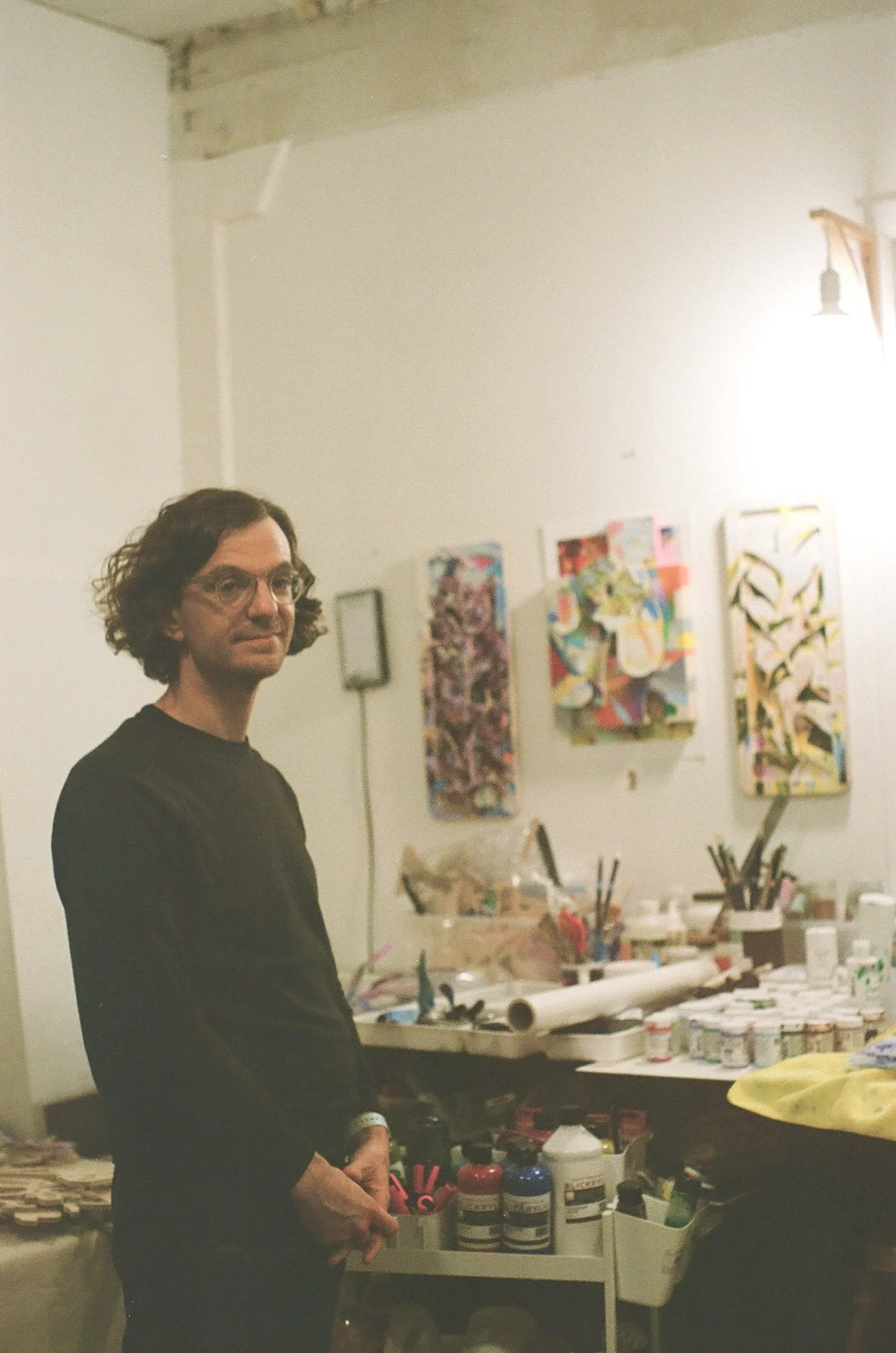
Chris Lael Larson (b. Ohio, USA) is a multidisciplinary artist based in Portland, Oregon. Working across photography, painting, sculpture, and installation, Larson is known for dissolving the boundary between the photographic and the painterly, creating works defined by layered perspectives, vibrant color, and an emphasis on depth. His practice centers on constructing temporary, altar-like installations from photographs, paint, found objects, and natural elements, which he then captures in a hyperreal lighting style. These photographs often become canvases themselves, painted upon and reintegrated into new works alongside their original source materials. Larson’s work engages viewers through the interplay of multiple viewpoints and the physical presence of material elements, creating a deeper, more tactile connection. Characterized by complexity and intentional layering, his practice challenges the boundaries between media and form. Chris Lael Larson has exhibited at the Portland Institute of Contemporary Art, Carnation Contemporary, Nationale (Portland), Specialist (Seattle), Field Projects (New York), and Red Cat (Los Angeles). His work is held in notable collections, including Soho House Portland and the collection of Christopher Rauschenberg. He has participated in Spring/Break LA, the Seattle Art Fair, the Sitka Center for Art and Ecology, and programs with the Regional Arts and Culture Council.