Reviews
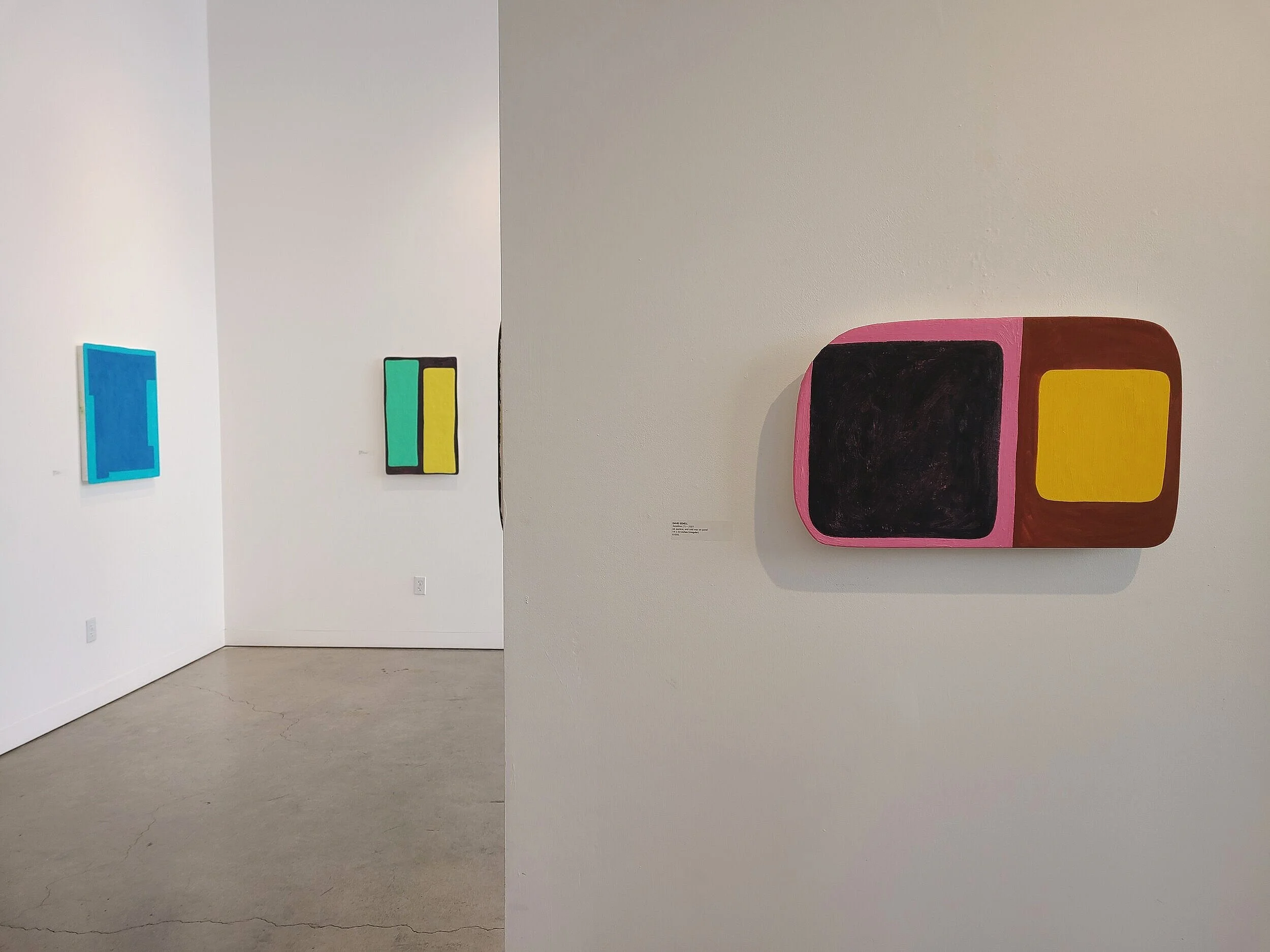
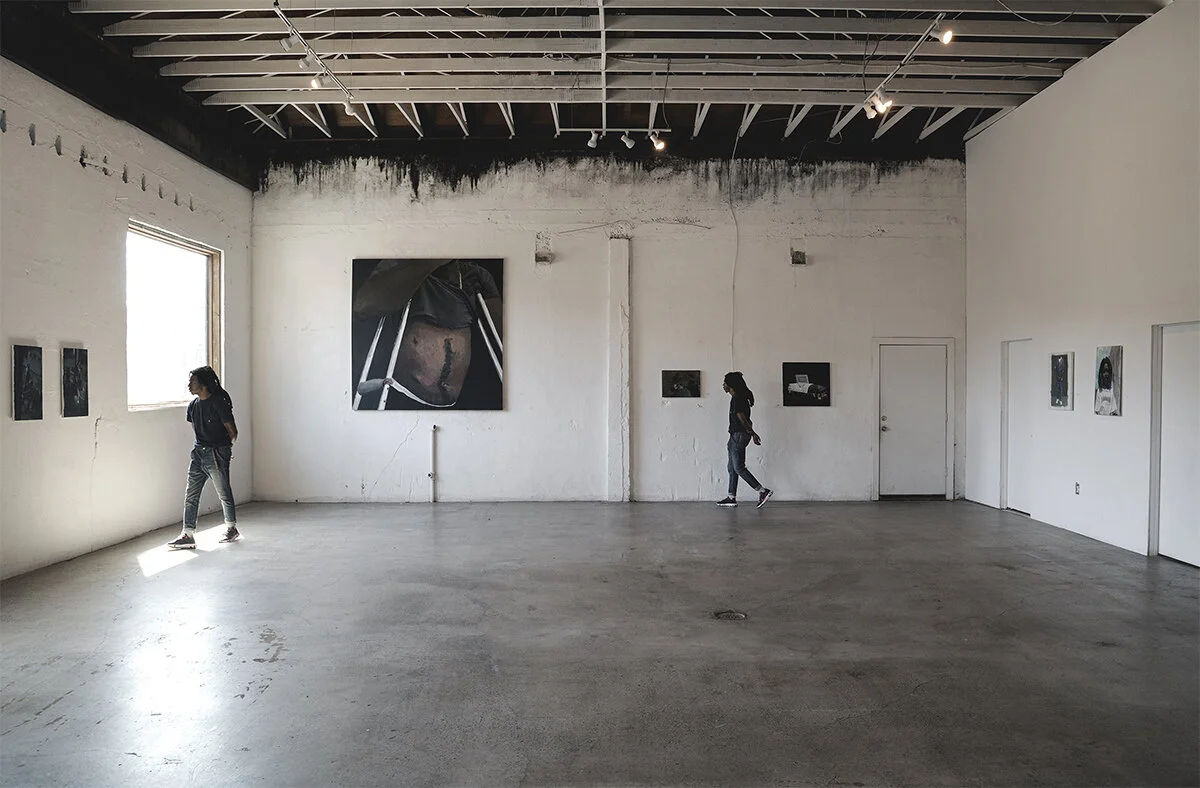
David Schell recently presented a substantial body of work at Portland’s Augen Gallery titled intimate, intimate. The exhibition presented a variety of smaller oil paintings on a variety of canvas shapes, operating under the premise of a dual definition of the word intimate: “Intimate as an adjective suggests an experience that is taking place away from the rest of the world; as a verb, on the other hand, it looks outward.
Anthony Hudson (Grand Ronde) as Carla Rossi's much-anticipated sequel, Clown Down 2: Clown Out of Water. The screening of Clown Down 2: Clown Out of Water was paired with a Zoom panel discussion featuring Hudson and artists Arias Hoyle and Steven Paul Judd in conjunction with PICA’s Indigenous Residency Series (IRS). Clown Down 2: Clown Out of Water is Hudson/Rossi's follow-up from their 2019 Clown Down: Failed to Mount, which featured Hudson as Rossi hosting a Mister Rogers’ Neighborhood-style show while pinned beneath an IKEA cabinet.
Japeth Mennes’ new exhibition at Ampersand is striking for both its graphic immediacy and introspective qualities as well as its nuanced take on humble urban adornments. The artist offers these unassuming, ubiquitous subjects — Laundromat (washing machines) and Mailbox Buzzers (an assortment of intercoms and post boxes) — as touchstones so that one might ground themselves in the visual cacophony that is daily life in New York City (where Mennes lives and works).
Kooi favors swirling imagery that recalls organs, coral reefs, and fleshy fruit. Her abstracted forms are soft and fertile; they’re also ultra-sensory, like something strange and squishy you’d stick your hand into during a Halloween game. References to interiority are clear, but mysteries remain. A palette of lush, oceanic pastels pushes this sense of the mystic alongside the organic. If you dissected a mermaid, you might find Kinke Kooi’s paintings inside.
Avallone’s playground drawings are precise, technical in their accuracy, but are rendered on rough, handmade paper in varying muted tones. The interplay cements several visual dichotomies at play in Permission/Pleasure: fluidity vs. precision, childhood vs. adulthood, memory vs. the present, dreams vs. reality.
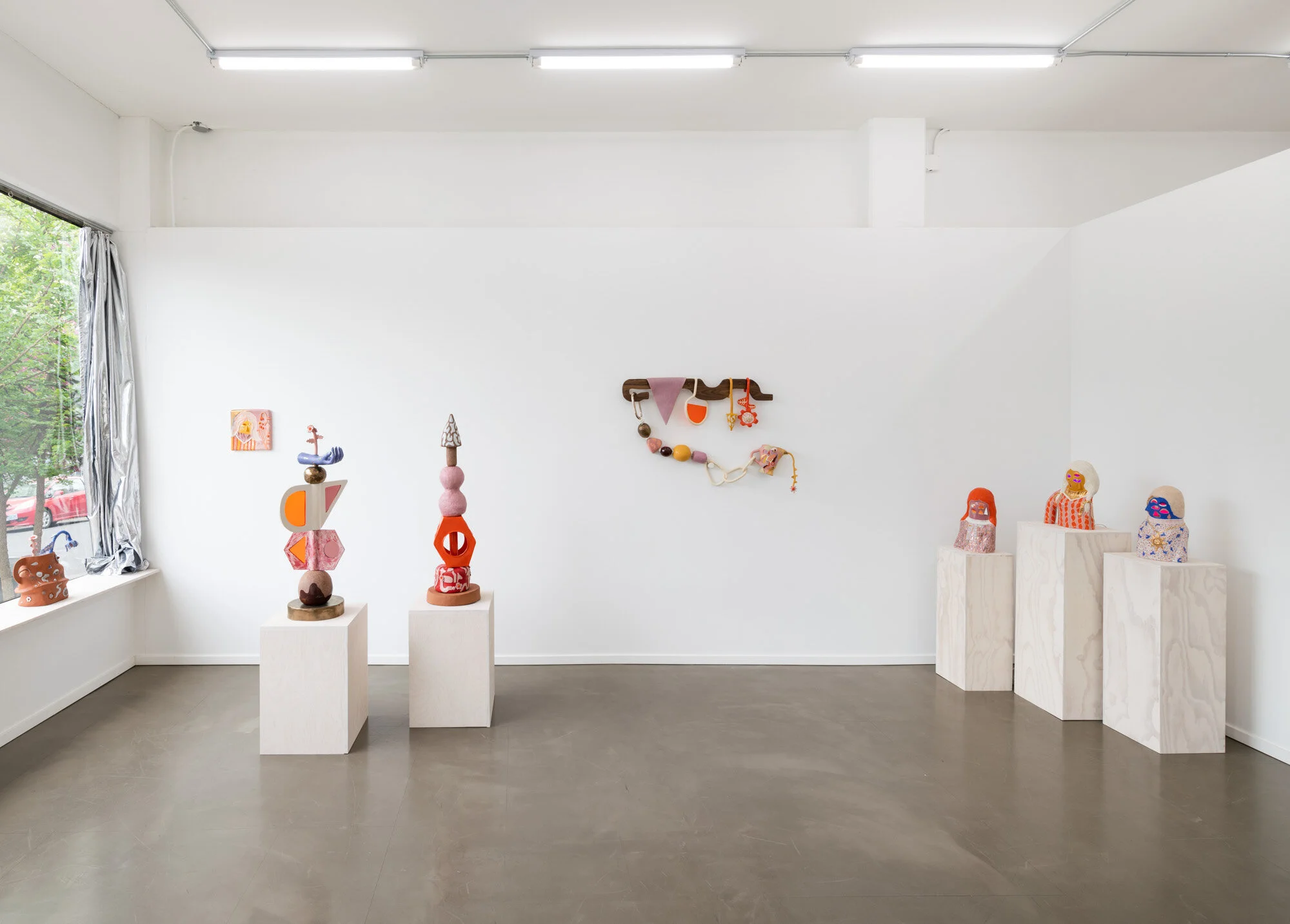
In Souvenir at Nationale, ceramic artist Emily Counts explores memory and intimacy through mystic objects centering on nature and the body. Counts emphasize the varying relationships between her objects and experiments with object utility, bringing human-object associations to the forefront.
Nighttime is both literally the period of darkness between our days and, more figuratively, scaffolding for a kind of exploration/dreaming/desire that possibly can’t exist in the daylight. When the sky turns black and the hum of the public quiets, we are left with enough stillness to re-envision our relationships to space, time, and self.
While umm no sources imagery from Chinese and American culture, the exhibition holds a universal appeal. It manages to inspire laughter in a historically painful time but doesn’t deny the ongoing gravity of cultural conflict, authoritarianism, and xenophobia.
Shamanism is in our DNA. This practice, involving varied methods of altering consciousness in order to commune with spirit realms, dates back to the early Paleolithic era.
A review about Timelines of the Future: Christine Howard Sandoval, curated by Lucy Cotter, Curator-in-Residence at Disjecta Contemporary Art Center by Jess Nickel.
Then there are curious snake-like symbols, and a cartoonish, shadowy figure crouched in a corner, his eyes wide. Click, click, click. The story widens, titillates. A mysterious death, a haunted house, vampires, New Age.
At Melanie Flood Projects, I Won’t Last A Day Without You, curated by Yaelle S. Amir, the exhibition’s prints are displayed in several series along the walls, framed works overlapping with vinyl prints to create fluid horizontal movement. The framed prints do not have glass separating them from the viewer, creating intimacy and highlighting the dot matrix texture of each work.
At Nationale, Anya Roberts-Toney’s Summer’s Eve imagines a matriarchal realm with an edge. The artist’s series of twelve oil and acrylic paintings are shaped by visions of euphoric women amongst flora, but hint at the complexities inherent to such a space.
Joseph Rodriguez’s forms integrate into the spaces around them; causing the disruption that only a careful blending of street art and installation smarts can achieve.
A review of "Artifacts of Affection" by Rachael Zur at Gallery 114, up through August 2020 by Ashley Gifford
Textiles often provide a sense of comfort: a handmade blanket, the curtains in our bedroom, tablecloths on our kitchen tables, all fiber-based objects that remind us of, and are quite literally made from, the feelings of home.
As I waited in anticipation, the cold marble wall I was leaning on began to warm with my rising excitement. We took our seats, the lights low and blue - someone is on stage in a defensive fetal-like position. It was Linder, I later came to realize. The scene hushes the incoming audience members into a whispered lull. The atmosphere is set.
On an early fall evening at the Portland Institute of Contemporary Art, a crowd waits in eager anticipation under a hush of palpable energy. Three large projections fill the wall in front of us, and a three-channel video appears as if mimicking a triptych.
Nudity is both personal and universal, and occupies this ‘space’ in different ways that aren’t always just physical - but does it take up more space?
Currently, the project space is converted into an art gallery alongside the first event of the reprogrammed FFTT, a mural by L.E.O. and another by Axel Void, both on the exterior of the Tips on Failing building.