
Elizabeth Arzani
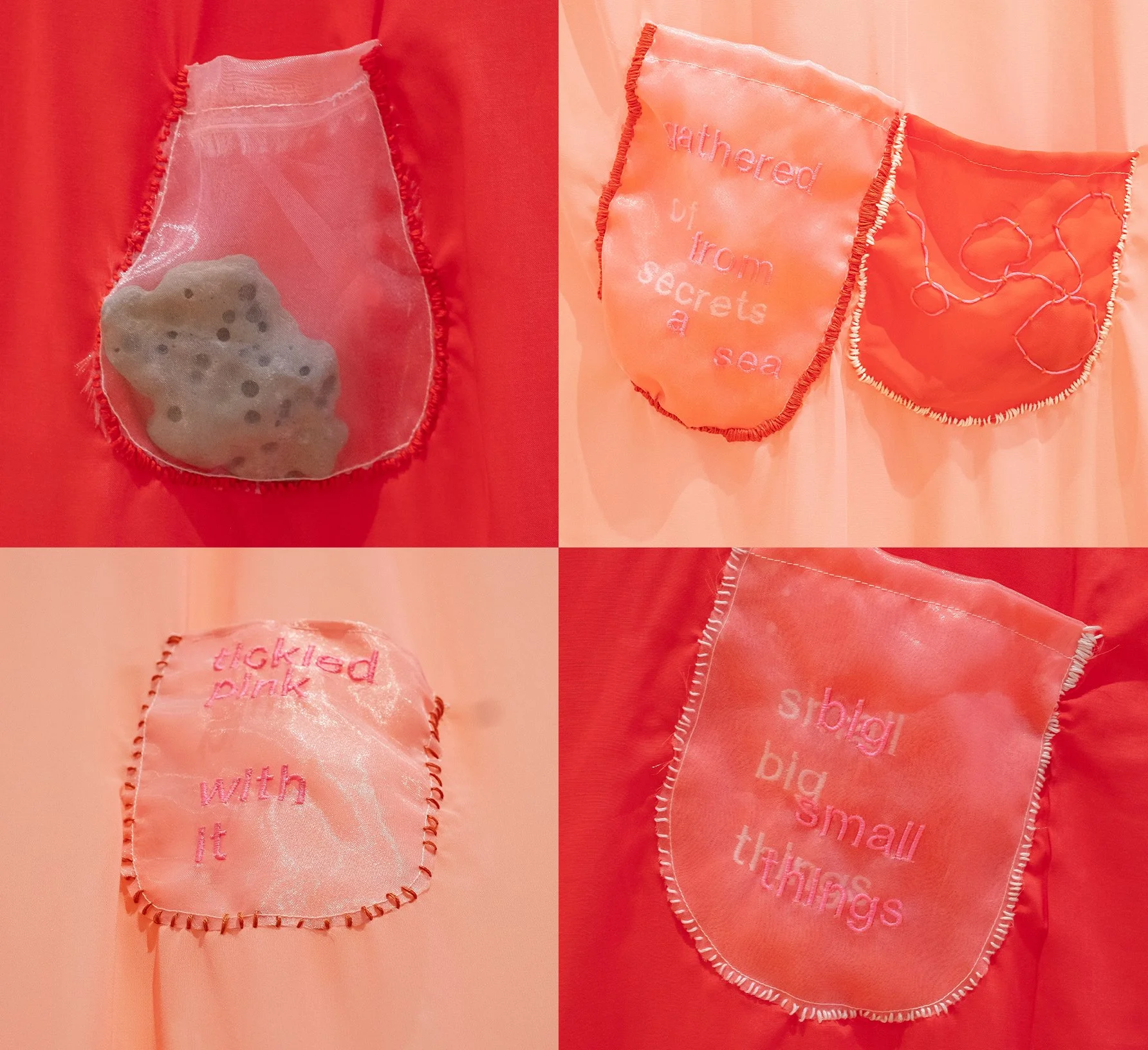
Pocket Secrets — Elizabeth Arzani, photos by Yasser Marte
Elizabeth Arzani describes her studio practice as "consistently inconsistent." On any given week she might be hand-building ceramics or building tin assemblages in her garage studio, screen-printing at a community studio, or playing with embroidery machines, weaving, and paper pulp. Walking her dog counted too. For Elizabeth, noticing the color of a certain street at a certain hour is part of the work.
A former elementary art teacher who now works at WildCraft Studio School, Elizabeth credits her sketchbook with saving her art practice. She's also a collector at heart, of materials, ideas, words, and even custom-matched house paint colors with names like "File Not Found – Red." Her work sits somewhere between language and material, archive and paradox, and much of it circles back to a question she can't quite shake: when is it time to let go of something? This past June, she brought that sensibility to a solo show at the Pendleton Center for the Arts.
I visited Elizabeth's studio earlier this year, and she was generous enough to answer a few questions about her artist crushes, the gallery that put Portland on the map for her, and why she's so nosey about other people's studios.
— Ashley Gifford
Which artists inspire you, and why?
Oh, I have so many artist crushes: Ann Hamilton, Arlene Shechet, Dawn Cerny, Caroline Kent, Helen O'Leary, Mark Bradford to name a few.
I keep thinking about Ann Hamilton's show The Common Sense at the Henry Art Gallery in 2014. Her writings on touch have stayed with me:
"In silence or in speech, reading and being read to are other forms of touch. The words of poets and writers stir us. When this happens we may be compelled to note, copy or underline and often to share that touch – by passing the book from hand to hand, by reading out loud, or by sharing the page."
I feel this way about many writers and also experiencing visual work in person. It is important to see artwork in person, to experience it in real time. The way Shechet, Cerny, Kent, O'Leary and Bradford all collect, use and assemble materials in new and unexpected ways touch me in a visceral way—even without physically ever touching their work (sans Hamilton), sharing space with it stirs me.
I know they say, don't meet your heroes, but Ann Hamilton, Dawn Cerny, Caroline Kent, and Helen O'Leary have all been lovely to meet in person.
What’s your favorite gallery in Portland, and your favorite gallery or museum anywhere in the world? What makes them special?
PDX Contemporary Art put Portland on the map for me. I actually sent the gallery a snail mail letter back in 2011 when I was still living in North Carolina. It was for an assignment in undergrad. I was asked to interview a contemporary artist I admired and I had just been introduced to Storm Tharp's work at the Whitney Biennial. It felt really special to finally have the opportunity to visit PDX Contemporary in person, once I moved to the PNW several years later. It also felt special that Jane remembered my letter.
When I lived in Luxembourg, I loved visiting the Mudam Museum. The building itself, designed by the late architect I.M. Pei, creates space that captures light and shadow magically, inside and out. Sometimes I visited just to be in the space itself and sometimes it was also for the exhibitions. I was lucky enough to see memorable shows by Etel Adnan, Suki Seokyeong Kang, Vivian Suter, and Danh Vo at the Mudam.
What does your studio practice look like, and how does it fit into your day-to-day life?
My studio practice is consistently inconsistent. Sometimes I work in my garage studio on ceramics, or tin assemblages. Sometimes I am screen-printing in a community studio. Recently, this has been at Brave Atlas Studios thanks to an invitation from local artist, founder and owner, Rebecca Boraz. I like to think about my studio practice in an expanded way. Before my dog passed away this summer, I considered dog walking as part of my art practice. Walking helps me to problem solve and work out ideas. It inspires me to pay close attention, reminds me to look up, look down, go outside and to notice site specific color stories at different times of day and in different locations.
One of the most important aspects of my studio practice is drawing. I credit my sketchbook with saving my art practice. It taught me how to shift my mindset and respond to each season I am in by using what is available to me. For example, when I was a full-time overwhelmed elementary art teacher drowning in the daily maker's marathon of teaching, Wednesday staff meetings doubled as my figure drawing classes. Drawing in the in-between times taught me how to sustain my art practice even in the busiest of times. And now that I work for WildCraft Studio School, I feel like a forever student. My material explorations have since expanded to playing with machine tufting, weaving, and painting with paper pulp. My most recent material experiments include combining screen-printing and ceramics or collagraph printing with milk cartons and Tetra Pak packaging. Play is essential to my studio practice.
What are you listening to, in the studio or out of it?
Dope Lemon and Arthur Russell have been playing on repeat a lot recently. I tend to randomly shuffle playlists and be surprised by something new. That's how I found the song, "Strangers," by Ruby Haunt. Depending on my mood or the type of work I am doing, I will switch between loud(ish) music, dancing while I work or quiet focused time working in silence, deep in my own thoughts. Sometimes I just need quiet. If there are a lot of repetitive tasks, I might watch psychological thrillers or true detective type shows. On warm summer days, I like to work with the window open, listening to the birds chirping and the wind rustling the trees. In the rainy season, sometimes I just listen to the sound of rain falling outside or the swoosh of cars driving through puddles.
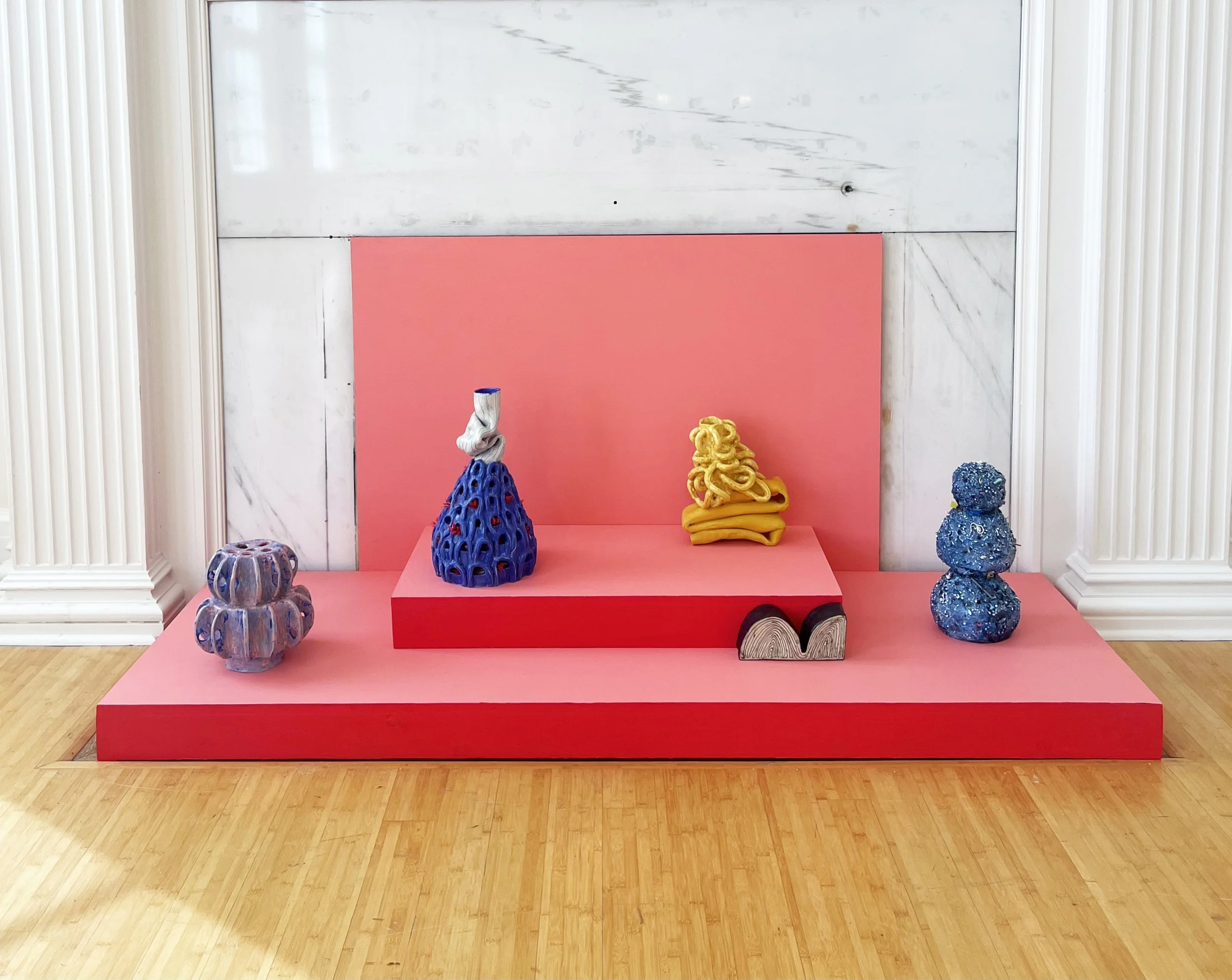
Pocket Secrets — Elizabeth Arzani, photos by Yasser Marte
What does your studio practice look like, and how does it fit into your day-to-day life?
I read a lot. For the show at Pendleton Center for the Arts, I was researching the history of pockets, amulets, and talismans. I found it a bit funny that I was carrying around a Pocket book that was also not a pocket-sized book. When I am getting ready for a solo show, everything I do circles back to art in some way.
Traveling to sunny places brings me joy. I daydream about this a lot, particularly in the winter. I am itching to travel to somewhere I've never been before. I'm very interested in visiting the Southwest and Joshua Tree or Portugal.
What do you love most about visiting other artists’ studios?
I am so nosey. I love to see how artists organize their studios, tools, and bookshelves—observing little notes or reminders written here and there. I remember finding the phrase, "don't be clever—be true," scribbled on the wall at David Eckard's studio. It feels special to witness a studio in action, the messier the better. I want to know the truth of how something is made.
What are your top three colors?
I have this habit of taking objects or ceramics to the hardware store to color match them in house paint. For my show at Pendleton Center for the Arts, I color-matched pink/salmon and red chiffon and rayon fabrics that were used to create custom 12 ft curtains with pockets. For the exhibition File Not Found with Quinha Faria at Carnation Contemporary back in March 2025, I painted the walls for an installation with a color matched to one of Quinha's clothes hangers. This color is labeled in my file as File Not Found – Red. I also have a Tree Branch Pipe – Blue saved to my file. This particular blue is from a glaze that includes cobalt. Cobalt or Kobold in German means goblin. I like using blue a lot in my work because it is so multi-faceted. Rebecca Solnit wrote about blue as "the color of there seen from here, the color of where you are not." Maggie Nelson's answer to why blue in her book Bluets, is "we don't get to choose what or whom we love…we just don't get to choose." Variations of blues and rusty orange-reds have been really prominent in my work over the past year.
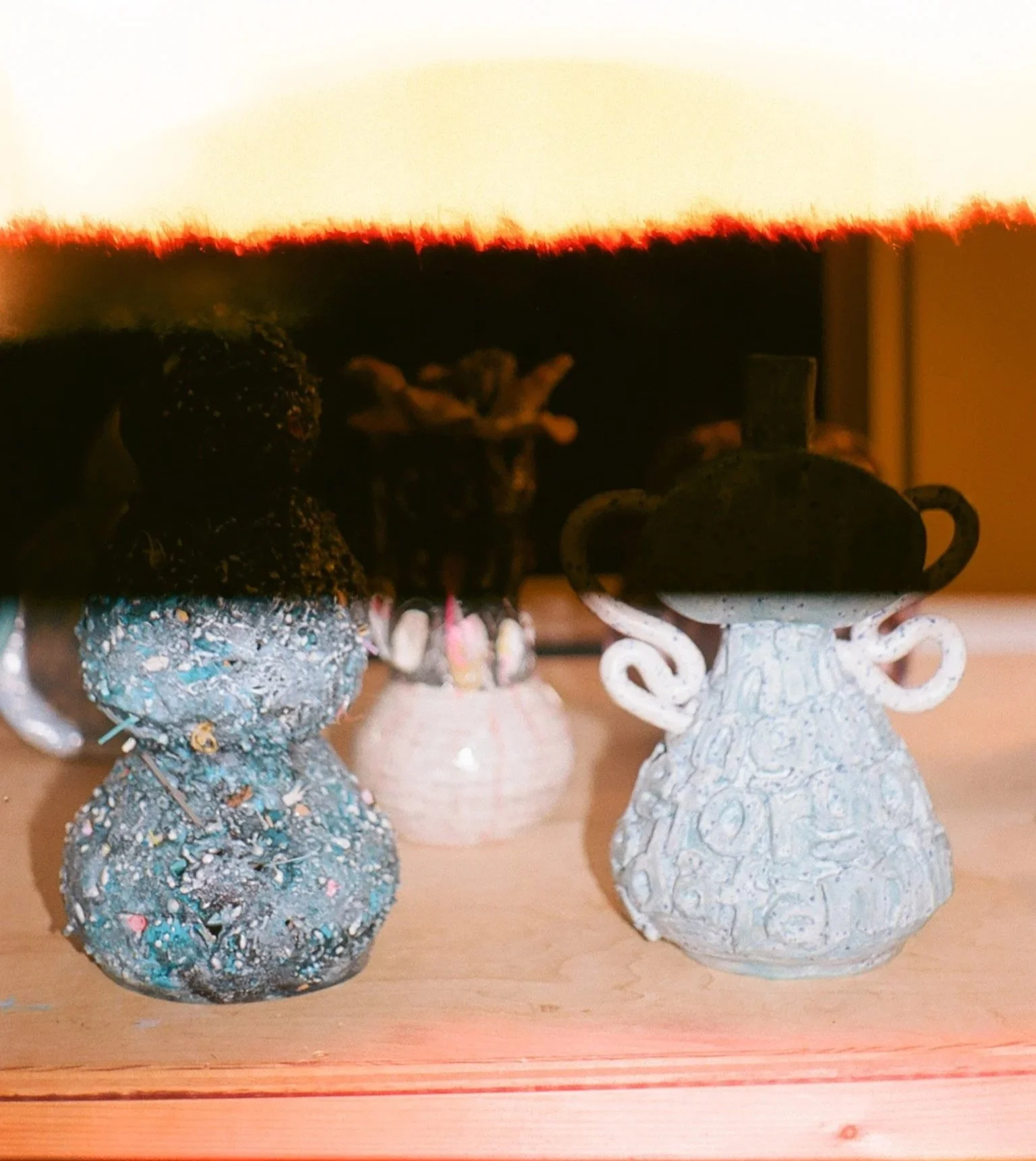
Film photos by Ashley Gifford, taken during a studio visit with Elizabeth Arzani
Is there a question that keeps coming up in your work?
For me the question that haunts me is: when is it time to let go of something? I struggle with wanting to keep things that aren’t meant to last.
As a collector of sorts, I am often looking for connections in the seemingly opposite. Much of the exhibition, Pocket Secrets was about small big things that make a difference when you are feeling sad, anxious, or lonely. During the making of the exhibition at Pendleton Center for the Arts my dog was diagnosed as terminally ill. It was really hard for me to leave home for a week and install the exhibition knowing how sick he was. What helped me was taking a little rock that I collected from the waterfront (one of his favorite spots) the day after we found out about his illness. Every day that I was away from him or worried or missing him, I could reach in my pocket and hold the smooth rock between my fingers. And it helped.
What are three to five words that describe your art?
Language, Paradox, Materiality, Collecting, Archive
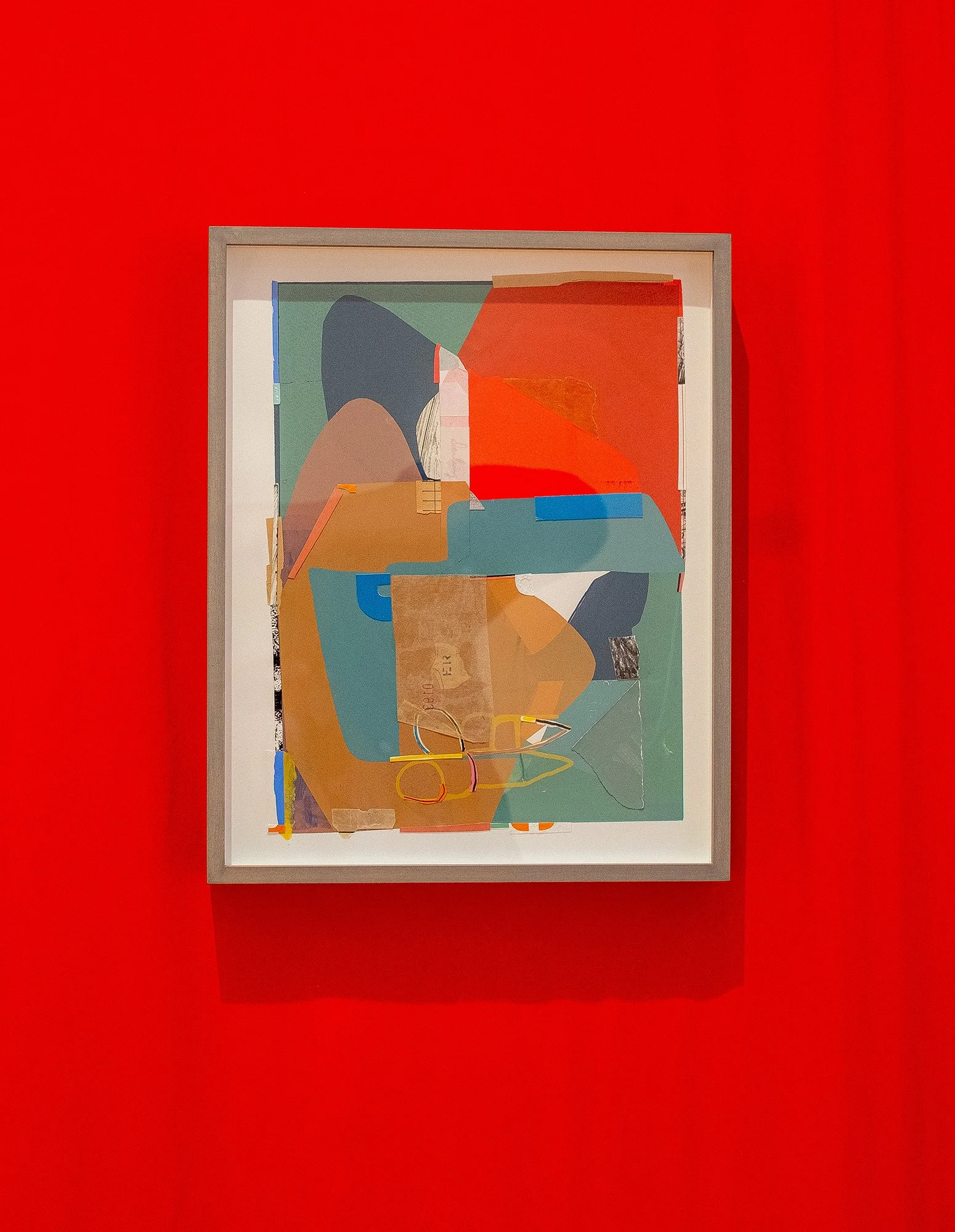
Pocket Secrets — Elizabeth Arzani, photos by Yasser Marte